Research
Master Hyperliquid HIP-4. Learn how to integrate Outcome Markets on HyperCore & HyperEVM with institutional-grade RPC infrastructure and USDH settlement.


The Hyperliquid HIP-4 infrastructure enables fully collateralized, fixed-range contracts that settle deterministically at expiry. These instruments differ structurally from perpetuals because they eliminate the mechanics of liquidation and feature bounded payoff profiles.

At a product level, HIP-4 introduces dated outcome contracts. At an infrastructure level, it changes how margin, settlement, and data propagation behave under load. Expiry becomes the dominant system event, not continuous funding updates.
This guide explains how Hyperliquid HIP-4 infrastructure operates across HyperCore and HyperEVM, how settlement is finalized, and how builders should architect production integrations around expiry-driven execution.
115,344 clients stake with Imperator.co
115,344 clients stake with Imperator.co
Start staking with Imperator and maximize your rewards.
Shifting from Continuous Risk to Deterministic Resolution
The most significant change is in its architecture. HIP-4 introduces outcome-style contracts that settle within predefined bounds, shifting the system from continuous risk recalibration to deterministic resolution.
At a structural level, HIP-4 introduces native prediction market primitives into the execution layer. These instruments are not synthetic overlays but first-class contract types within HyperCore. This means that matching logic, margin accounting, and settlement semantics must accommodate bounded resolution states rather than continuous funding adjustments. HyperCore remains the execution environment, but the matching engine must now support instruments whose lifecycle is defined by expiration rather than liquidation thresholds.
Scaling Margin and Infrastructure for Expiry-Driven Load
With bounded payoff profiles, exposure is capped at contract entry, eliminating instrument-specific liquidation. While the Outcome contract itself cannot be liquidated, its value is factored into the Unified Margin pool, allowing it to act as collateral for other perpetual positions.
In perpetual markets, margin stress is volatility-driven and continuous. Under HIP-4, margin stress becomes expiry-driven and event-based, concentrating reconciliation at deterministic timestamps rather than throughout the contract lifecycle. Because settlement shifts from continuous recalibration to expiry-driven resolution, infrastructure load patterns also change. For builders, this means system stress concentrates around resolution timestamps.
From Perpetuals to Prediction Market Primitives
Perpetual futures rely on mark prices, funding rates, and liquidation engines to maintain solvency. HIP-4 Outcome Markets remove continuous funding mechanics and liquidation thresholds from the execution cycle.
They become fully collateralized contracts with a predefined expiry and a bounded settlement range.
The absence of liquidation cascades simplifies systemic risk but concentrates activity around expiration. Liquidity provisioning strategies then shift from volatility capture to probability modeling.
For developers, indexing logic changes. Expiry timestamps become first-class events. Settlement is event-driven rather than continuous. Balance updates occur atomically when resolution is finalized. This structure guides the lifecycle: open position → hold exposure → reach expiry → finalize outcome → update balances.
This deterministic structure improves probability modeling and exposure forecasting, but it increases the operational importance of handling precise resolution.
HyperCore, HyperEVM, and On-Chain Settlement
HyperCore processes order matching and state transitions. HyperEVM expands composability for contracts and integrations interacting with outcome markets.
Settlement occurs through on-chain settlement, where expiry triggers deterministic balance updates. Once the resolution condition is finalized, the margin and position reconcile immediately in USDH. This ensures that while HYPE powers the network, the outcome payoffs remain stable and peg-protected.
Because contracts are fully collateralized, settlement does not depend on liquidation engines. Instead, expiry becomes the synchronization point for exposure finalization. Resolution windows generate concentrated load. Systems must process expiry events, margin reconciliation, and balance updates in near real time.
As an infrastructure partner for HIP-4 Outcome Markets, Hyperliquid focuses on maintaining consistent state propagation and throughput during these bursts. Deterministic expiry reduces cascading risk but increases the importance of accurate event handling.
Data Streams vs API: Real-Time Data Architecture
Understanding Data streams vs API is critical when integrating outcome markets. Expiry-driven load makes real-time data propagation essential.
Feature | JSON-RPC (Pull) | WebSocket (Push) | gRPC Streaming |
|---|---|---|---|
Communication | Request-response | Persistent connection | Bi-directional streaming |
Latency | Moderate | Low | Very low |
Throughput | Limited by polling | Continuous | High sustained |
Use Case | Account queries | Order book updates | High-frequency ingestion |
Rate Controls | Subject to Rate limits | Connection-based | Optimized streaming |
Best For | Indexers | Trading dashboards | Execution engines |
JSON-RPC is suitable for discrete-state queries and reconciliation. WebSocket supports live updates, including order book changes and resolution events. gRPC provides sustained streaming with superior throughput and minimal latency, making it suitable for execution engines.
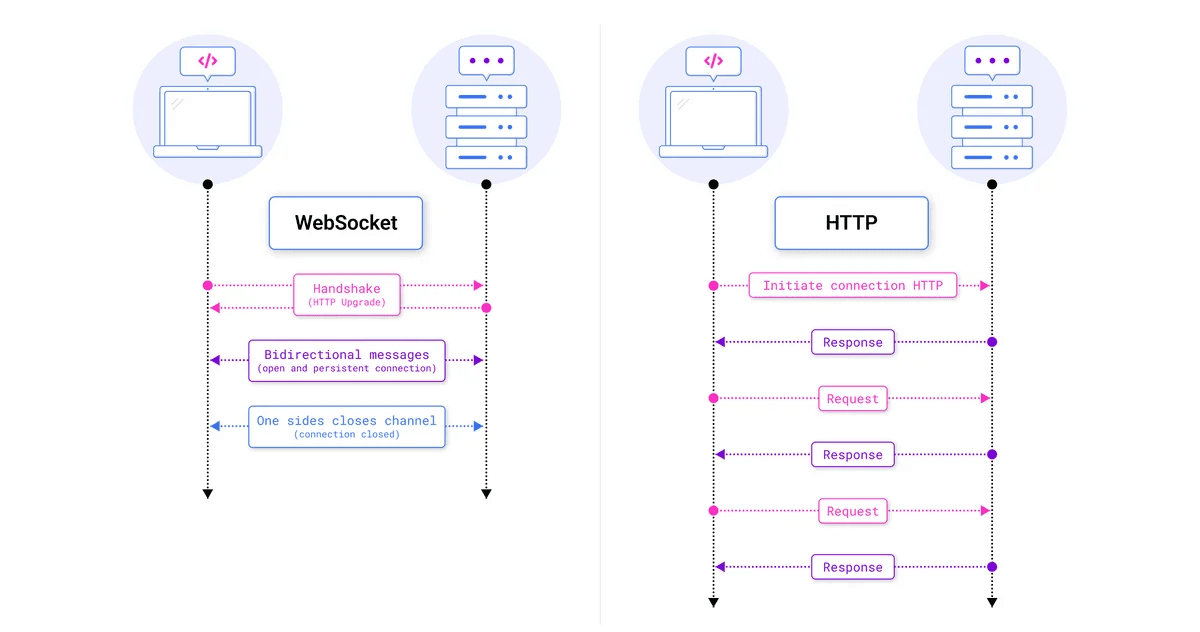
Outcome markets underscore the importance of streaming because expiry events trigger simultaneous margin recalculations and balance updates. However, polling alone risks hitting rate limits during peak resolution windows.
Builders should architect ingestion layers to prioritize streaming while reserving RPC for verification and reconciliation.
Hyperliquid RPC, Latency, and Rate Limits in Outcome Markets
Hyperliquid RPC behavior becomes more critical under expiry clustering. Public endpoints operate under shared rate limits, which can introduce variability during periods of concentrated load. Latency sensitivity increases because balance states update at deterministic timestamps. Even minor delays can produce stale exposure calculations or misaligned hedging logic.
Production-grade Hyperliquid integration should anticipate indexing load around expiry events. Systems must reconcile margin updates promptly while maintaining consistent order state.
Hyperliquid, as an infrastructure partner, aligns execution routing and RPC availability to support stable integration during outcome resolution.
Builders should design for predictable throughput and bounded latency rather than assuming uniform network conditions.
HypeRPC and Private Gateway Architecture
HypeRPC provides private gateway access designed for high-demand integrations. When outcome contracts expire simultaneously, RPC traffic can spike sharply.
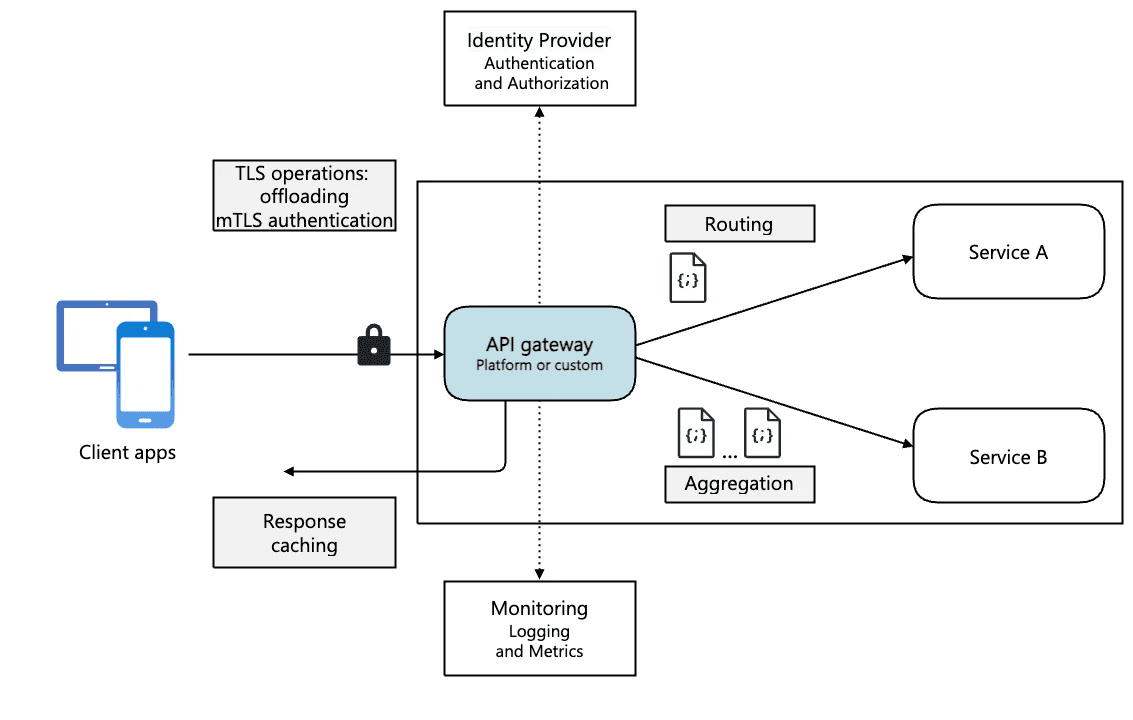
Private gateways reduce shared endpoint contention, stabilizing latency and mitigating shared rate limit constraints. They also support sustained gRPC ingestion for execution engines that require uninterrupted state feeds.
For builders managing unified margin exposures across perps and outcomes, private access reduces jitter and improves determinism around expiry.
This architecture is particularly relevant for trading systems that must react to settlement events without relying on best-effort shared infrastructure.
Building Resilient Execution on Hyperliquid
Resilient integration begins with deterministic order submission. Systems must validate margin allocation, contract expiry, and market state before placement.
Resolution detection should rely on streaming subscriptions rather than repeated JSON-RPC polling. Retry logic must respect rate limits while preserving state coherence.
Unified margin reconciliation loops should confirm post-settlement balances before initiating follow-up trades. Builders should treat settlement finality as the synchronization anchor for subsequent actions.
Resilience is achieved through consistent state management, not merely raw speed.
Integrate with Hyperliquid HIP-4 Infrastructure Today
HIP-4 Outcome Markets expand derivatives on HyperCore by introducing fully collateralized, fixed-range contracts with deterministic expiry. Integrating into Hyperliquid HIP-4 infrastructure requires aligning streaming ingestion, margin reconciliation, and expiry-aware execution logic. Builders should test expiry-driven workflows, optimize streaming channels, and plan for concentrated resolution load.
Production systems must prioritize predictable latency, sustained throughput, and controlled exposure to shared rate limits. Hyperliquid’s execution and settlement architecture enables outcome market integrations that remain consistent under expiry-driven load conditions.





Discover all our Staking Opportunities
Acces over 50+ protocols to maximize your staking returns
FAQs
1. What is Hyperliquid HIP-4 infrastructure?
It is the architectural framework enabling fully collateralized, fixed-range outcome contracts, unified margin interaction, and deterministic on-chain settlement.
2. How do HIP-4 Outcome Markets differ from perpetuals?
They use predefined expiry and bounded settlement instead of continuous funding and liquidation engines.
3. When should developers use WebSocket vs JSON-RPC vs gRPC?
Use JSON-RPC for discrete queries, WebSocket for live updates, and gRPC for high-throughput streaming execution systems.
4. How do rate limits affect outcome trading?
Expiry clustering can increase RPC demand, and exceeding shared Rate limits may delay state synchronization.
5. What is required for production-grade Hyperliquid integration?
Streaming ingestion, private gateway access, unified margin reconciliation, and expiry-aware execution logic.
$0 assets under managment
$0 assets under managment
Join investors who trust Imperator to maximize their returns. Take the first step today.