Tutorial
Learn how to stake Monad step-by-step. Understand Monad staking, validators, rewards, and how to use a Monad wallet safely on the Monad mainnet.

Many people discover a new network and wonder how they can participate in it, rather than just holding the token. On the Monad blockchain, staking is the most straightforward way to achieve this. When you learn how to stake Monad, you help secure the Monad network, support honest validator activity, and earn ongoing MON staking rewards in return. The process works through delegation, which allows you to connect your tokens to a validator without relinquishing ownership or control.
Staking also helps strengthen the network’s security model. Validators with strong uptime utilize their infrastructure to maintain the stability of the chain. Monad’s parallel execution design processes many EVM transactions concurrently, significantly improving throughput compared to traditional single-threaded chains. This guide explains what Monad is, how validators fit into the Proof of Stake Monad ecosystem, why staking matters, and how to complete delegating MON from your own Monad wallet on the mainnet.
What Is Monad?
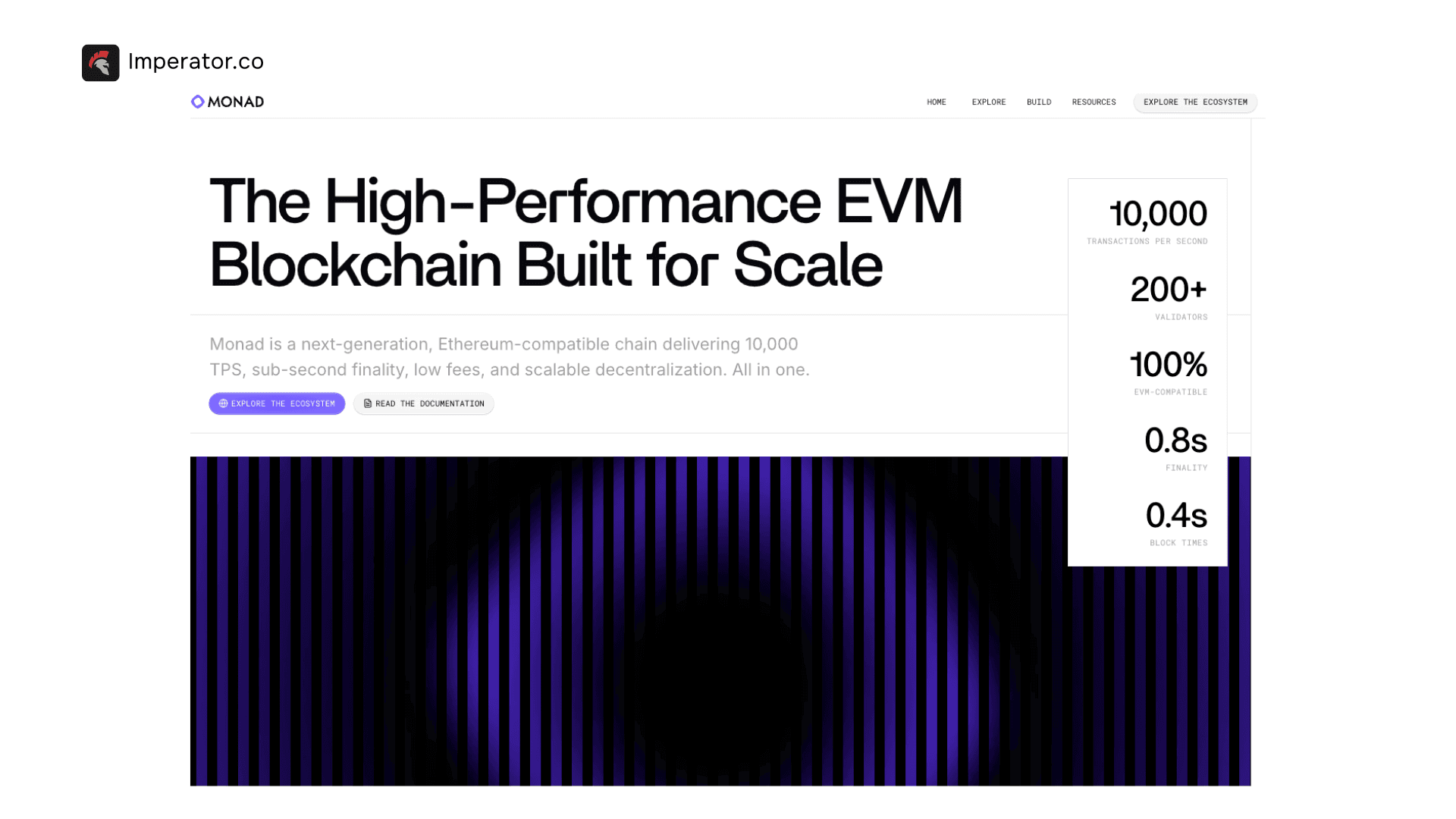
Monad is a high-performance Layer 1 blockchain designed for fast execution and low fees. It is fully EVM-compatible, so the tools and contracts that work on Ethereum can often work here with minimal changes.
For both developers and users, this maintains a familiar experience and reduces the friction of transitioning to the Monad network. The Monad blockchain relies on staking instead of mining. Security comes from MON, which is locked and used to support validators. That is where Monad staking starts to matter.
How Monad’s Technology Works
Monad blockchain processes multiple transactions simultaneously through parallel execution. This helps it stay responsive even when demand is high.
Blocks confirm quickly, fees remain low, and smart contracts can scale to more users without large delays. For stakers, this means a network that feels responsive when you delegate, claim rewards, or move funds.
Validators Inside Monad’s Proof-of-Stake Model
A Monad validator is a node operator that verifies transactions and proposes new blocks. Validators stake their own MON and receive additional MON through delegating MON from users. The total amount tied to a validator becomes its weight in the Proof of Stake Monad ecosystem. Validators with more weight are chosen more frequently to participate in block production.
Delegators keep full ownership of their MON. By staking, you are indicating to the protocol that your tokens should contribute to a specific validator’s weight. In return, you share in the MON staking rewards that the validator earns.
Operators such as Imperator are known for secure infrastructure and careful monitoring on other networks like Hyperliquid.
Why Stake Monad?
Staking MON is about more than yield. It provides you with three distinct roles within the Monad network simultaneously. You earn MON staking rewards from protocol block rewards and transaction fees. Your effective yield depends on factors such as total stake, validator performance, commission, and overall network activity. You strengthen the security of the Monad blockchain.
As more MON is staked, it becomes harder and more expensive for anyone to attack or disrupt the network. Your position adds real economic weight behind honest validators.
You also play a role in shaping the network’s direction. In many Proof-of-Stake ecosystems, validators play a central role in governance. As Monad’s governance processes mature, delegating to a validator whose approach you trust can help align your stake with that direction.
115,344 clients stake with Imperator.co
115,344 clients stake with Imperator.co
Start staking with Imperator and maximize your rewards.
How to Stake Monad (MON)
Now that the purpose is clear, the actual process of Monad staking can be broken into simple steps. Each step builds on the last, from setting up a Monad wallet to completing the delegation of MON on the Monad mainnet.
1. Setting Up Your Monad Wallet
First, prepare a Monad wallet that can connect to the EVM environment. Wallets like MetaMask work naturally here. If the Monad mainnet is not already added to your wallet, the staking interface will usually offer to configure it when you connect. This step establishes a clear link between your address and the Monad blockchain.
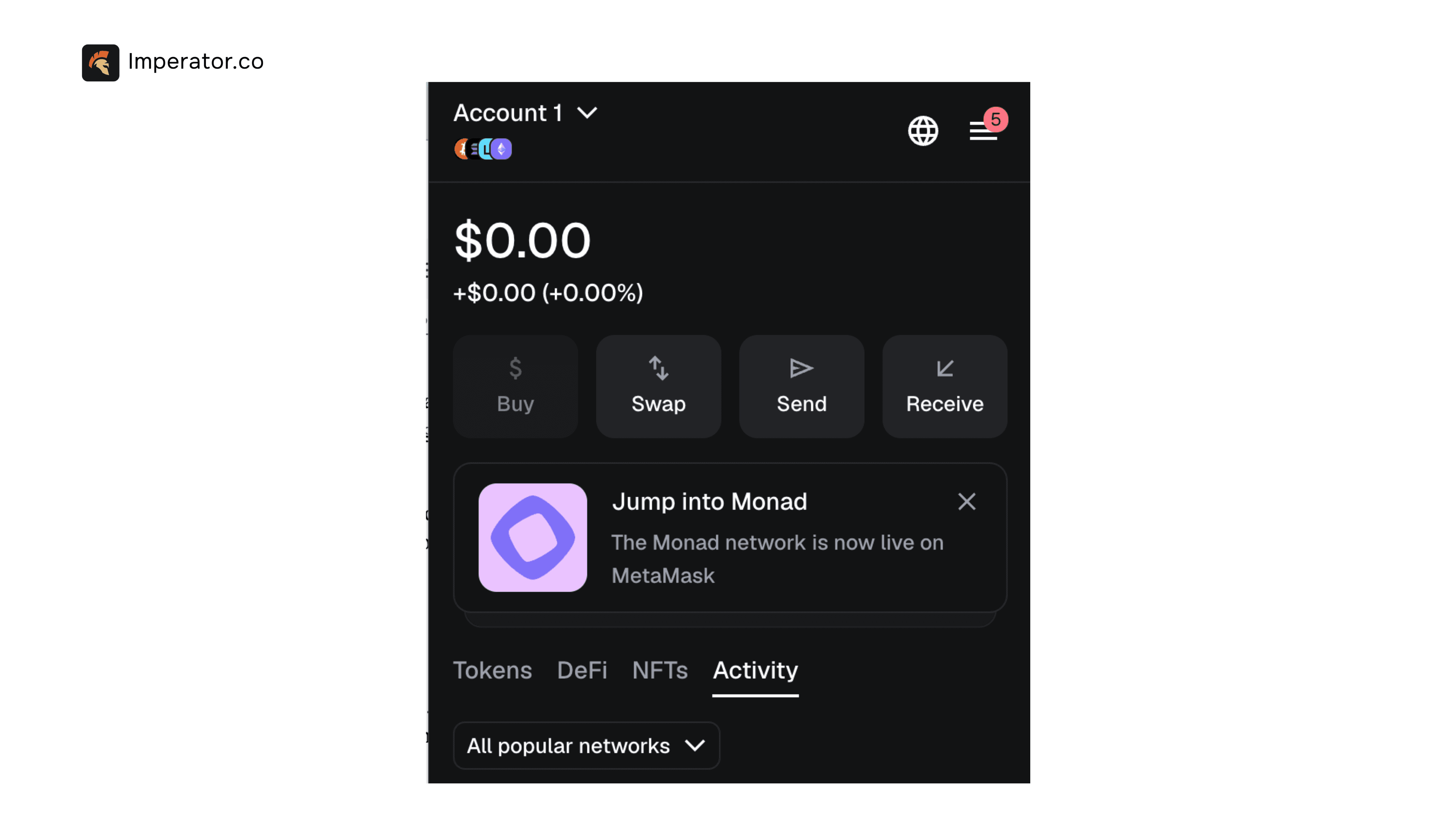
2. Add MON to Your Wallet
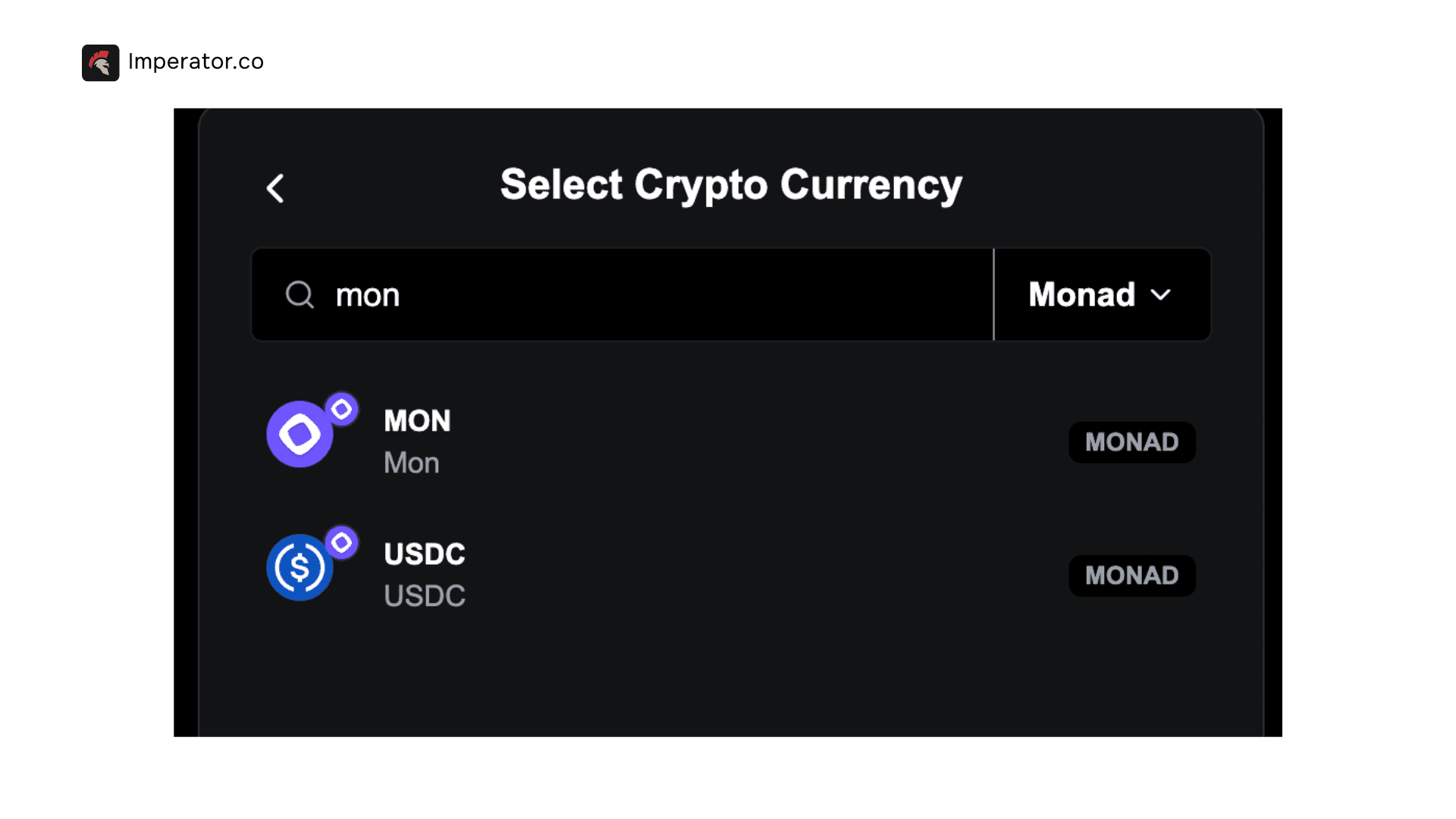
Next, move MON into your Monad wallet. You can withdraw MON from an exchange that supports the network or transfer it from another address. Always keep a small amount of MON aside for gas so that Monad staking actions like delegation and unstaking can be processed smoothly.
3. Open a Staking Interface
Then, visit a staking dashboard that reads validators from the Monad network. After connecting your wallet, you will see your available MON and a list of validators. The interface usually displays each validator’s commission, uptime, and total weight. This is where you prepare to start Delegating MON.
4. Select a Monad Validator
Choosing a Monad validator is one of the most important decisions in the process. A validator with strong uptime, stable infrastructure, and clear communication is more likely to deliver consistent MON staking rewards.
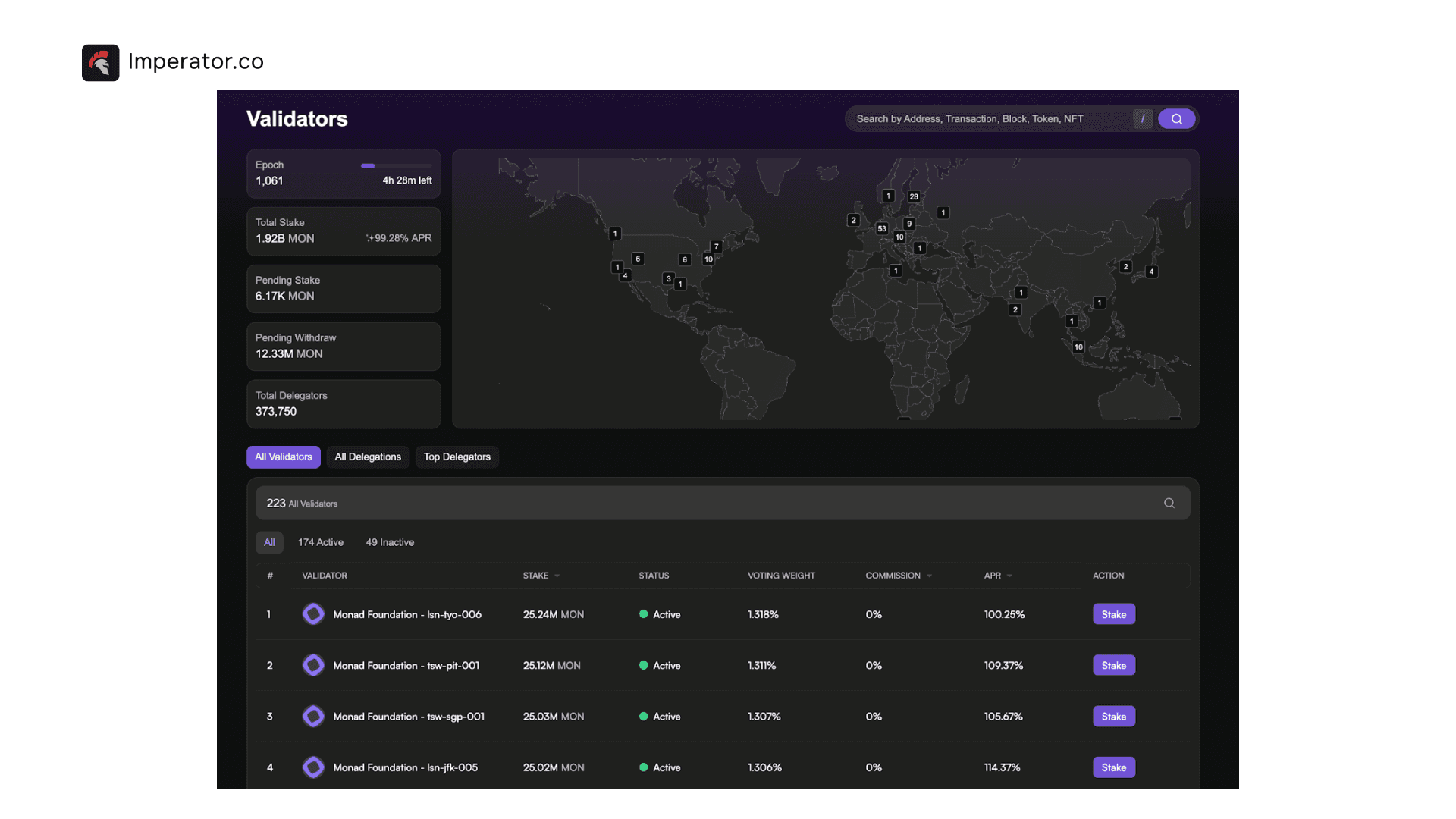
Teams like Imperator, which already manage validators and RPC infrastructure across multiple chains, bring the same standards to their Monad setups.
5. Delegate MON
After you choose, enter the amount of MON you want to delegate and confirm the transaction. Delegation informs the Monad mainnet that your tokens support the validator’s weight.
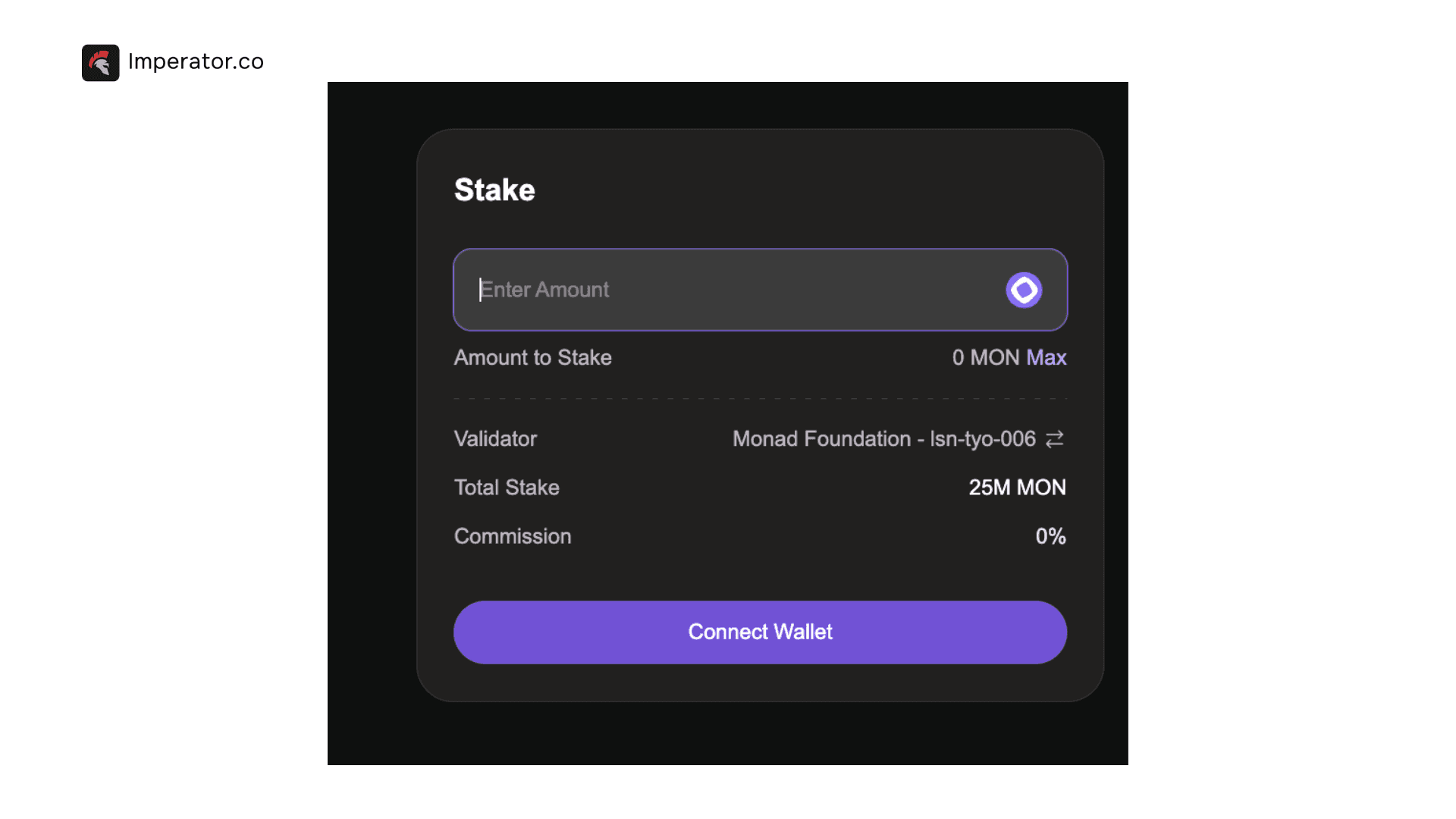
The MON remains in your wallet, but the protocol treats your stake as part of that validator’s total. From the next epoch onward, your position participates in the same reward flow as the validator.
6. View and Manage Your Stake
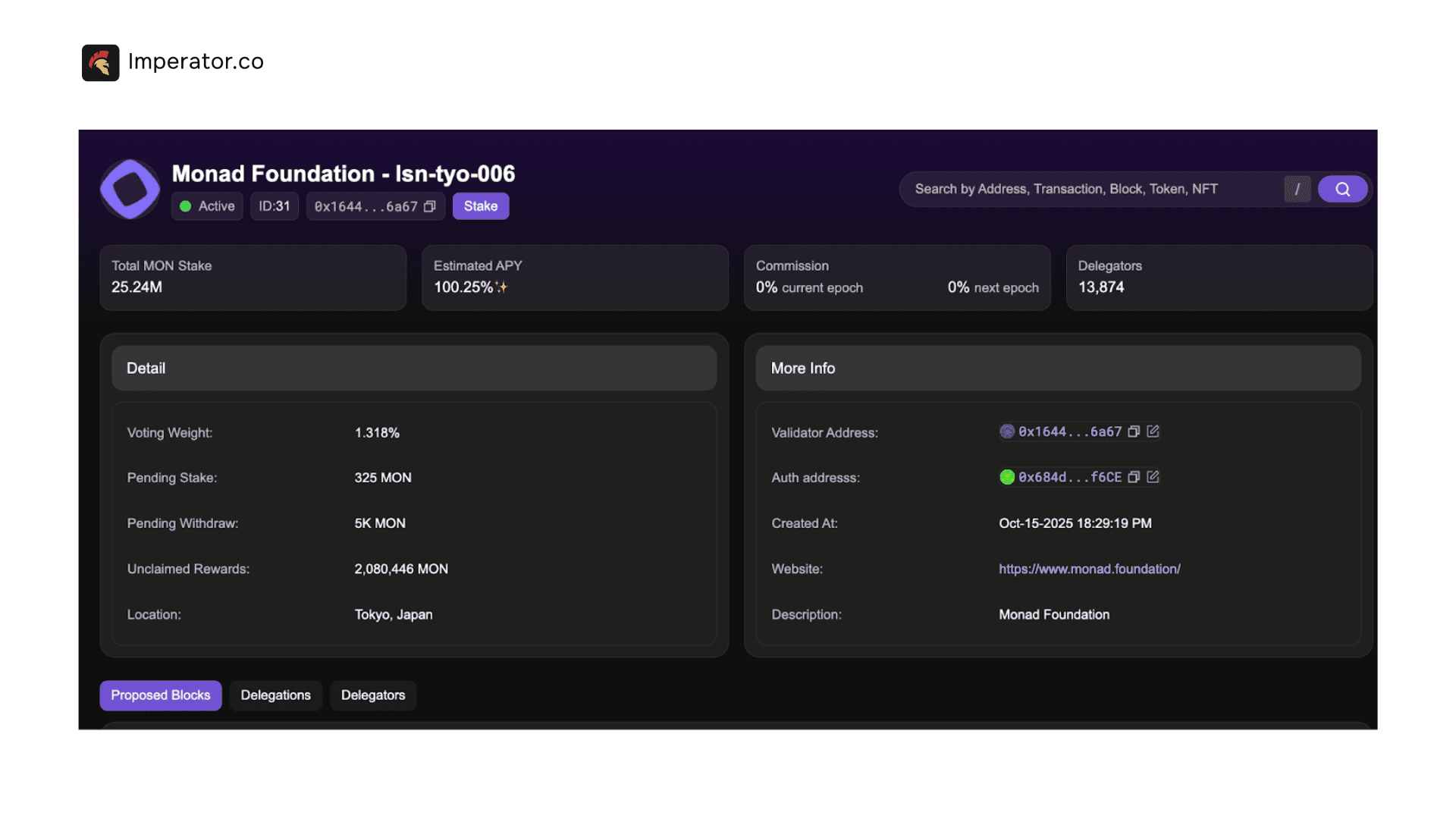
Once delegation is complete, the staking dashboard will reflect your active stake and any MON staking rewards you have earned. Over time, you can monitor validator performance and decide whether to keep your stake in place, redelegate to another Monad validator, or compound by staking your rewards.
7. Unstake When You’re Ready
If you decide to exit Monad staking, you submit an unstake request from the same interface. Monad’s unbonding period is defined by protocol parameters and can be modified through governance. While Monad tracks slashable offenses in its consensus design, automated in-protocol slashing is not currently enabled, so penalties for misbehavior are expected to evolve as the network matures.
Closing thoughts: Staking on Monad
Rewards on the Monad blockchain adhere to the fundamental principles of the Proof-of-Stake design. Validators earn when they help produce blocks, and the protocol distributes those rewards based on the validator’s weight. Delegators receive a share that reflects their contribution to that validator’s total stake.
The validator applies the commission before distributing rewards to delegators. This fee funds the infrastructure and operations that keep the node running. A validator with strong uptime and solid engineering can leverage its reputation to secure regular block participation, which in turn supports more predictable staking rewards for everyone delegating MON to that validator.





Discover all our Staking Opportunities
Acces over 50+ protocols to maximize your staking returns
FAQs
1. What is Monad staking?
Monad staking is the process of locking MON on the mainnet to support the Monad network and earn MON staking rewards by delegating MON to a validator.
2. Is there a minimum amount of MON required?
There is no strict on-chain minimum for Monad staking. You only need enough MON to make delegation meaningful and to cover gas fees on the Monad blockchain.
3. Can I unstake MON whenever I want?
You can submit an unstake request at any time. The Proof of Stake Monad design then applies an unbonding period before your MON becomes liquid again in your Monad wallet.
4. Why does validator choice matter so much?
Your Monad validator affects uptime, risk, and the stability of your MON staking rewards. A well-run validator with professional infrastructure is more likely to produce blocks consistently and avoid downtime or other issues that could affect rewards.
5. Do I lose control of my MON when I delegate?
No. Delegating MON does not transfer ownership. It only links your stake to a validator for weight and reward distribution on the Monad mainnet.
$0 assets under managment
$0 assets under managment
Join investors who trust Imperator to maximize their returns. Take the first step today.