Research
A technical guide to High-Performance Hyperliquid RPCs covering rate limits, gRPC streaming, Direct Peering, and production-grade infrastructure.

Hyperliquid RPC blockchain performance is a production constraint that determines how reliably systems read state, ingest real-time data streams, and submit orders under load. For algorithmic trading and institutional execution on Hyperliquid, infrastructure quality directly affects execution timing and stability.
This guide examines the 100 RPM rate limit, streaming architectures, including gRPC streaming, the role of Direct Peering, private gateway models, and how these components shape execution quality in HYPE markets.
Navigating the 100 RPM Rate Limit on HyperEVM

Public endpoints enforce a 100 requests per minute (RPM) rate limit on HyperEVM JSON-RPC calls.
With JSON-RPC, each balance check, order status query, or account lookup counts as a discrete call.
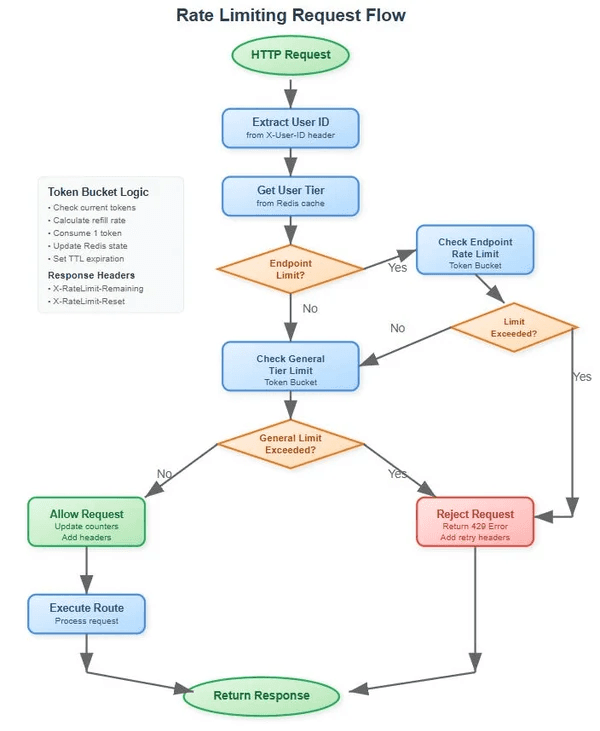
When bots poll at short intervals, request volume compounds quickly. During periods of volatility, burst traffic increases further, raising the likelihood of throttling. Throttling introduces retries and exponential backoff. Because retries themselves consume requests, the system can enter a feedback loop where effective load increases precisely when stability is required.
Market makers, arbitrage systems, and analytics dashboards are particularly exposed. Refreshing multiple feeds in dashboards can multiply request counts, while bots that depend on tight polling windows risk inconsistent timing once rate ceilings are reached.
Because the bottleneck is architectural rather than parametric, mitigation requires structural change. Subscription-based streams reduce redundant calls because updates are delivered only when state changes. Caching prevents unnecessary repeated queries. For sustained demand, a private gateway isolates the workload from shared congestion. Public endpoints prioritize accessibility. They are not engineered for continuous high-frequency interaction.
HypeRPC for Institutional Throughput
While public endpoints serve as a sandbox, they lack the stability required for institutional high-frequency trading (HFT). HypeRPC solves this by providing a private gateway architecture that isolates your traffic from public congestion. This infrastructure leverages Imperator’s validator-level proximity (EU/JP regions) to ensure sub-millisecond latency.
Crucially, HypeRPC includes a specialized Data API and real-time data streams engineered to ingest massive market datasets without the lag of traditional polling. By bypassing the 100 RPM limit and offering a 99.99% SLA, HypeRPC delivers the deterministic speed and tick-level accuracy professional desks require to scale on HyperCore.
API vs Streams: Infrastructure-Level Differences
JSON-RPC operates on a request-response model. Clients initiate every interaction, which makes data delivery pull-based. Even when the state remains unchanged, repeated polling generates traffic.
WebSocket maintains a persistent connection and supports push-based delivery. Instead of repeatedly requesting updates, clients subscribe to event streams and receive updates as they occur. Polling introduces an artificial delay because the timing depends on the request interval.
Streaming reduces these gaps by delivering event-driven updates. For execution-sensitive systems consuming real-time data, push-based delivery improves timing consistency.
Technical Comparison Table
Feature | JSON-RPC | WebSocket |
|---|---|---|
Communication Model | Request-response | Persistent stream |
Data Delivery | Pull-based | Push-based |
Latency | Moderate (polling delay) | Lower (event-driven) |
Throughput | Limited by polling frequency | Continuous |
Rate Limit Sensitivity | High | Lower |
Best Use Case | Account queries | Order book updates |
JSON-RPC remains suitable for discrete reads. WebSocket better supports sustained order book monitoring and execution feeds.
115,344 clients stake with Imperator.co
115,344 clients stake with Imperator.co
Start staking with Imperator and maximize your rewards.
The Mechanics of gRPC streaming in High-Frequency Trading
gRPC streaming extends streaming efficiency through HTTP/2 multiplexing and bidirectional communication. Multiple logical streams share a single connection, reducing repeated setup overhead.
Binary serialization lowers payload size relative to text-based formats. Persistent transport reduces handshake repetition, tightening control of latency under sustained load. For tick-level order-book deltas, liquidation feeds, and high-frequency monitoring, continuous streams maintain update sequencing without polling gaps.
Reduced serialization overhead improves effective throughput, particularly when handling concurrent subscriptions. Within the HyperCore infrastructure, streaming connections help clients maintain a synchronized state during volatility.
For algorithmic trading on HYPE pairs, minimizing state lag supports more accurate order placement decisions. Streaming does not eliminate delay. However, it removes avoidable overhead introduced by repeated request cycles.
Direct Peering: Reducing Latency at the Infrastructure Level
Direct Peering refers to optimized routing between client infrastructure and Hyperliquid’s blockchain. Standard public internet paths introduce multiple intermediary hops.
Each hop increases variability in round-trip timing. Although absolute delay may appear small, accumulated variance affects execution predictability. Through direct peering, traffic follows lower-hop routes between data centers. Fewer intermediaries reduce jitter and improve timing consistency.
For institutional execution, consistent latency is more valuable than occasional speed spikes. Predictable timing simplifies risk management and execution calibration. Direct routing does not remove all delay. It reduces avoidable path inefficiencies that otherwise compound under load.
Optimizing Hyperliquid RPC Performance for Institutional Flow
Institutional systems impose stricter constraints on Hyperliquid RPC performance. Stability under burst load, synchronized state propagation, and deterministic response behavior are baseline requirements.
Institutional execution demands:
Stable latency distributions
Sustained throughput during volatility
Continuous alignment with HyperCore state
A private gateway architecture isolates traffic from shared congestion. Traffic shaping smooths burst behavior. Request batching reduces redundancy without sacrificing accuracy.
Fallback logic ensures continuity if a single endpoint degrades. Monitoring must focus on tail latency rather than averages, because extreme values often determine execution outcomes. For high-volume HYPE trading flows, RPC infrastructure becomes a measurable execution constraint rather than a background utility.
Beyond Public Endpoints: Why HypeRPC Is Essential for Pro Growth
HypeRPC provides controlled access through a dedicated private gateway model. Unlike shared public endpoints, dedicated routing isolates workload from unrelated congestion.
Controlled-rate policies replace rigid shared caps, enabling higher, sustainable request ceilings. Isolation improves timing predictability during network-wide activity spikes. For professional builders seeking reliable capacity planning, dedicated infrastructure reduces performance variance.
Building Resilient Execution Pipelines on Hyperliquid
Performance without resilience introduces fragility. Production-grade systems implement:
Load balancing across endpoints
Multi-endpoint fallback
Stream health checks
Circuit breakers
Continuous monitoring of latency and error rates
Automated failover logic
Monitoring tail latency surfaces bottlenecks before cascading failure occurs. Health probes detect stalled streams early.
Hyperliquid RPC blockchain performance operates within a broader execution stack that includes strategy engines, risk systems, and observability tooling.
Final Words: Hyperliquid RPC performance
Hyperliquid RPC performance determines whether execution systems remain predictable under stress. The 100 rpm rate limit, polling overhead, streaming models such as gRPC streaming, and routing strategies like Direct Peering collectively shape timing stability and throughput capacity.
Builders optimizing Hyperliquid RPC performance prioritize streaming over polling, isolate workloads using private gateways, and design for deterministic latency distributions.
On Hyperliquid, RPC infrastructure is foundational to reliable algorithmic trading, institutional execution, and synchronized real-time state access at scale.





Discover all our Staking Opportunities
Acces over 50+ protocols to maximize your staking returns
FAQs
1. What limits public Hyperliquid RPC endpoints?
Public endpoints enforce a 100 rpm rate limit and operate in shared environments, which can introduce congestion and throttling during peak demand.
2. How does Direct Peering improve execution?
Direct Peering reduces network hops and latency variability, improving timing consistency for execution-sensitive workflows.
3. Does Hyperliquid support algorithmic trading infrastructure?
Hyperliquid supports execution-layer access through RPC endpoints, WebSocket feeds, and gRPC streaming, enabling real-time data ingestion for advanced trading systems.
$0 assets under managment
$0 assets under managment
Join investors who trust Imperator to maximize their returns. Take the first step today.