Research
Compare the best Hyperliquid RPC provider options for 2026. See latency, failover, observability, and which RPCs work best for production trading systems.

Choosing the right Hyperliquid RPC Provider is not a cosmetic decision. On Hyperliquid, RPC performance directly affects execution speed, data freshness, and system stability. Latency spikes, weak WebSocket connections, or poorly handled retries can quietly degrade trading bots, dashboards, and analytics pipelines.
This guide reviews Hyperliquid RPC providers as of January 2026, with a production-first lens. The goal is simple: understand how these providers behave under real load, not just how they look on a pricing page.
What Builds a Hyperliquid RPC

Hyperliquid’s architecture forces RPC providers to make real design choices. The HyperEVM layer behaves like a standard EVM environment. JSON-RPC calls, smart contracts, and tooling look familiar. Most providers perform reasonably well here.
On HyperEVM, transactions and smart contract interactions pay gas in HYPE, the native token of the Hyperliquid network. The HyperCore layer is different.
The HyperCore layer is different. It powers the native trading engine and order book. Access patterns are specialized, some methods are restricted, and latency sensitivity is much higher. Hyperliquid’s official APIs expose HTTP and WebSocket endpoints (mainnet and testnet) for exchanging data and streaming. Performance here depends on how close the RPC infrastructure sits to validator operations and how traffic is routed.
A production-grade Hyperliquid RPC stack usually includes more than a single endpoint. Dedicated capacity, low-latency routing, resilient WebSocket feeds, and often a separate data or indexing layer all matter. Providers that design for this from the start tend to outperform generic setups once traffic scales.
Stake Hyperliquid with Imperator.co!
Maximize your HYPE staking rewards : earn more, start now.
What a Hyperliquid RPC Provider Changes in Production
In testing, almost any RPC works. In production, differences compound.
A strong Hyperliquid RPC Provider minimizes tail latency, keeps WebSocket feeds stable during volatility, and handles retries without amplifying congestion. It determines how quickly orders propagate, how cleanly data streams update, and how much visibility teams have when things go wrong.
Providers that pair execution-focused RPC endpoints with structured data access perform better at scale. Separating live execution traffic from analytics and historical queries reduces pressure on RPC nodes and improves reliability, especially for trading-heavy workloads.
How to Compare Hyperliquid RPC Providers
Comparing providers starts with behavior, not features.
Latency consistency matters more than averages. For baseline context, Hyperliquid publishes public REST and WebSocket limits (weights per minute, connections, and subscription caps). Throughput limits and rate limits define how systems behave under stress. The failover design determines whether incidents cause downtime or go unnoticed. Strong observability turns debugging from guesswork into a process.
The most important distinction is specialization. Some providers add Hyperliquid as another EVM network.
Others design RPC infrastructure around Hyperliquid’s validator and trading architecture. That difference becomes visible the moment systems move from testing to production. And that is exactly why RPC providers’ lists need to be refreshed over time.
The Best Hyperliquid RPC Providers
1. Imperator (HypeRPC)
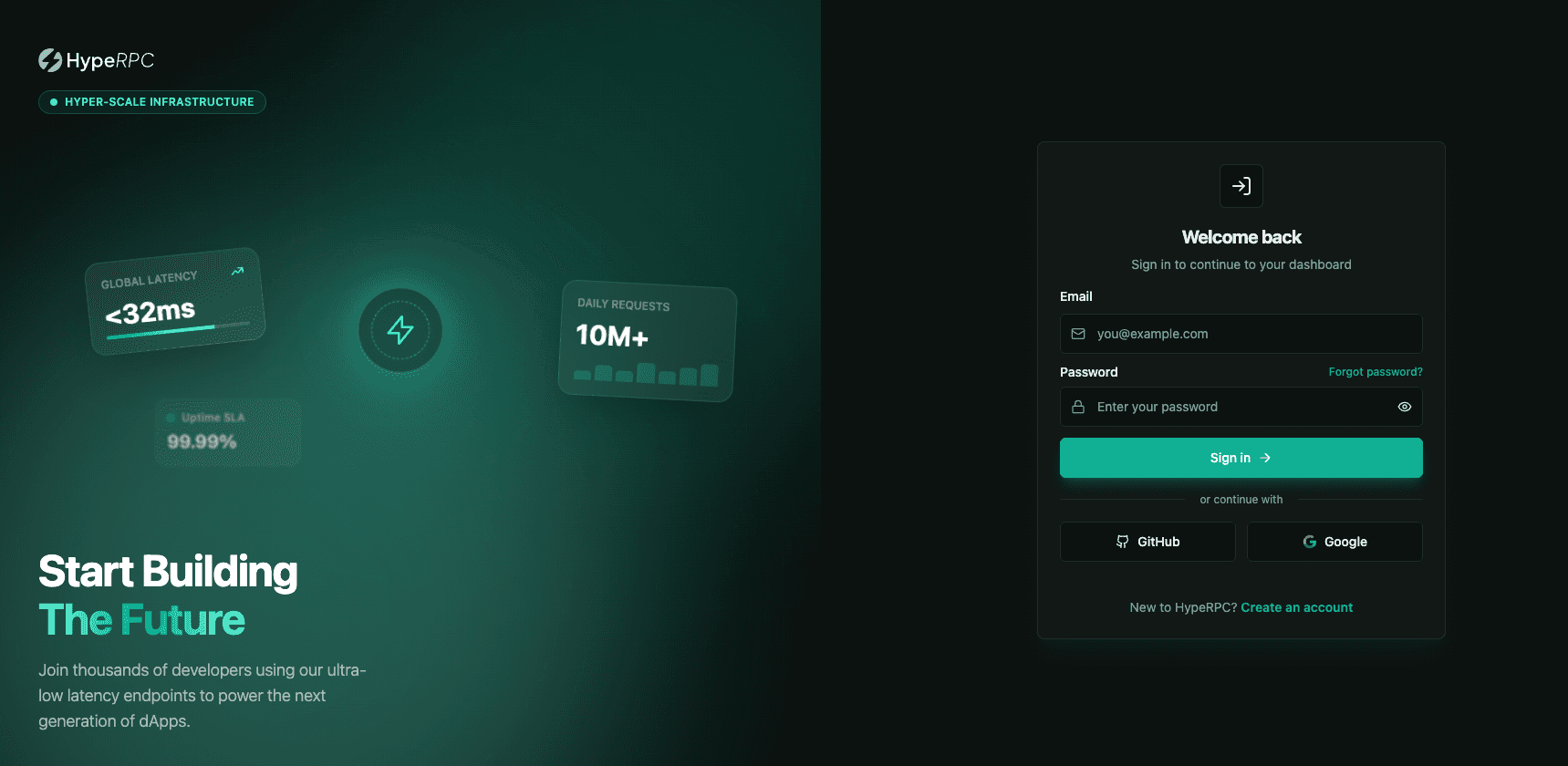
Imperator’s HypeRPC is a Hyperliquid blockchain-native RPC and data platform built on validator-grade infrastructure. It offers both shared and dedicated RPC nodes optimized for HyperEVM execution and HyperCore trading, with routing specifically designed for Hyperliquid’s architecture.
Key strengths: Latency remains consistently low, even during volatility, because traffic is routed close to the validator infrastructure. WebSocket feeds remain stable under burst conditions, which matters for bots and real-time dashboards. The addition of Data APIs and indexers allows teams to separate execution traffic from analytics, reducing RPC congestion during peak load.
Trade-offs: HypeRPC is purpose-built for Hyperliquid rather than broad multi-chain use. Dedicated capacity can cost more at a very large scale, but this reflects predictable performance rather than shared-resource contention.
Who should use it: Trading bots, high-frequency systems, and production workloads where RPC reliability directly impacts execution quality and uptime.
Alt text: Hyperliquid native RPC blockchain HypeRPC Imperator
2. OnFinality
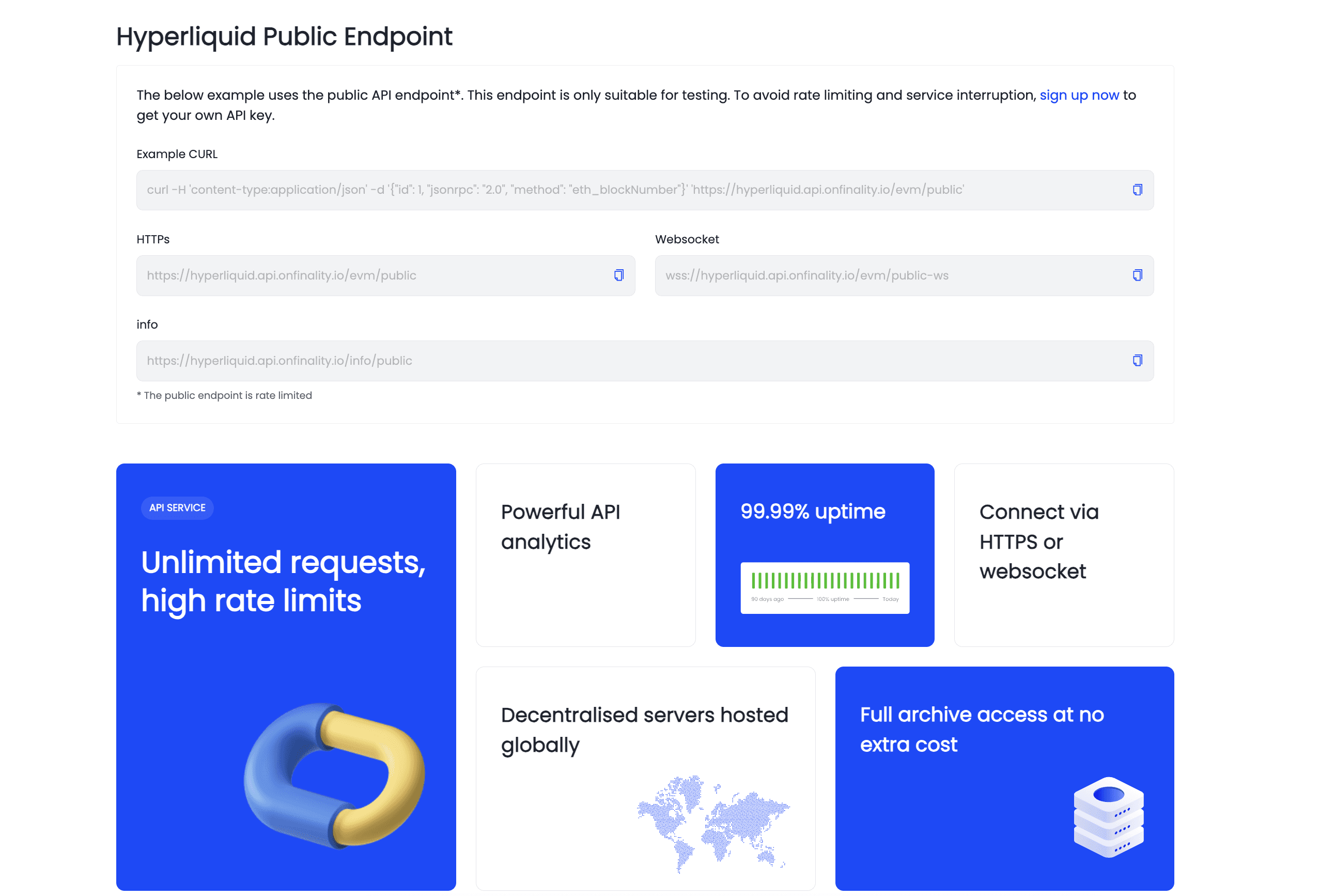
OnFinality provides managed RPC infrastructure with strong HyperEVM support and globally distributed endpoints. The service focuses on elasticity and quick onboarding for EVM-style applications.
Key strengths: Auto-scaling helps absorb traffic spikes without manual tuning, and regional routing across Asia, the US, and Europe keeps latency reasonably consistent. Integration is straightforward for teams already using standard EVM tooling.
3. Chainstack
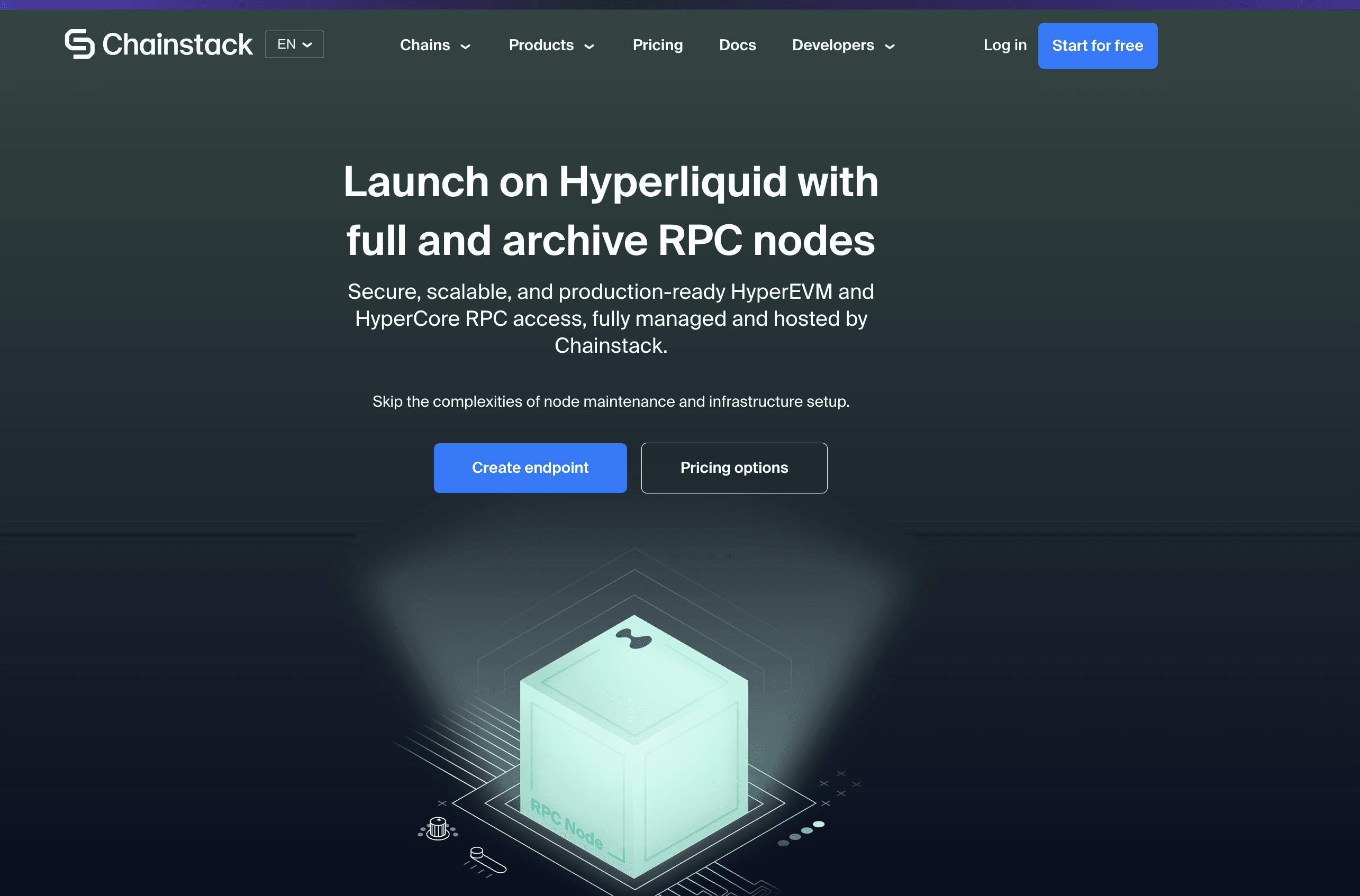
Chainstack offers managed, private Hyperliquid RPC nodes with private access to HyperEVM and HyperCore endpoints (availability may vary by plan and method).
Key strengths: Private endpoints reduce noisy-neighbor risk, which improves latency consistency. Built-in dashboards, logs, and archive access make it easier to support analytics and historical queries alongside live traffic.
Trade-offs: As request volume grows, costs can scale quickly. Extremely latency-sensitive trading strategies may require more specialized routing than shared private nodes can provide.
Who should use it: Teams running trading bots, analytics platforms, or dashboards that need private RPC access with good operational visibility.
4. dRPC
dRPC acts as a routing layer rather than a single-node provider, exposing a unified RPC endpoint.
Key strengths: dRPC promotes routing and redundancy features designed to improve availability across endpoints. If one region degrades, traffic is shifted without manual intervention. This keeps latency stable for globally distributed users and reduces operational complexity.
Trade-offs: Because dRPC abstracts the underlying infrastructure, teams have less control over Hyperliquid-specific tuning. HyperCore access is limited, and HyperCore support depends on the plan and supported methods.
Who should use it: Globally distributed bots and applications that prioritize resilience and uptime over chain-specific customization.
5. QuickNode
QuickNode is a large multi-chain RPC platform that has added Hyperliquid support, supports both HyperEVM and HyperCore through a single endpoint.
Key strengths: Fast provisioning, reliable WebSocket connections, and automatic scaling make it easy to integrate Hyperliquid into existing multi-chain stacks. Monitoring tools help teams track usage and errors.
Trade-offs: Hyperliquid support is not deeply specialized. QuickNode documents access to both HyperEVM and HyperCore via its endpoint, and execution-heavy trading systems may not see the same latency consistency as with validator-aligned providers.
Who should use it: Multi-chain teams that want Hyperliquid access without changing their existing infrastructure patterns.
6. Alchemy
What it is: Alchemy provides enterprise-grade RPC infrastructure with a strong emphasis on developer tooling and observability, including Hyperliquid HyperEVM support.
Key strengths: Advanced dashboards, detailed request tracing, and error visibility make it easier to debug production issues. Performance is stable and well-documented.
Trade-offs: Costs are higher, and Hyperliquid is one network among many rather than a core focus. HyperCore-specific optimization is limited.
Who should use it: Enterprise teams and analytics-heavy applications that value deep observability and mature developer tooling.
7. GetBlock
What it is: GetBlock provides managed HyperEVM RPC endpoints that focus on simplicity and fast onboarding.
Key strengths: Endpoints are easy to spin up, pricing is accessible, and performance is reliable for moderate workloads. This makes it practical for early production use.
Trade-offs: Observability is basic, and scaling headroom is limited. Under heavy traffic, teams may encounter rate limits or latency variability.
Who should use it: Small teams, internal tools, and projects moving from prototype into early production.
8. Stakely
Stakely is a load-balanced HyperEVM RPC endpoint via its Web3 API load balancer.
Key strengths: Validator alignment means nodes are maintained with network health in mind, leading to steady performance and predictable behavior. Load balancing provides basic failover, so traffic continues flowing if one node degrades.
Trade-offs: Tooling and observability are simpler than developer-first platforms. This means less insight into fine-grained latency or error patterns during incidents.
Who should use it: Teams that want validator-backed reliability, or a secondary RPC provider to complement a primary production endpoint.





Discover all our Staking Opportunities
Acces over 50+ protocols to maximize your staking returns
How to Choose The Right Hyperliquid RPC Provider
The right RPC provider reveals itself on bad days, not good ones.
Test latency in your target regions. Observe WebSocket behavior during spikes. Understand how rate limits and retries interact. Many production teams run a primary Hyperliquid RPC Provider alongside a secondary fallback to reduce risk.
On Hyperliquid, specialization and alignment often matter more than raw feature count.
FAQs
1. Why does HyperCore access vary across providers?
HyperCore uses specialized methods tied to the trading engine, and not all providers offer the same level of access.
2. Are public Hyperliquid RPC endpoints suitable for production?
No. They are rate-limited and have published limits that can constrain production workloads.
3. Do trading bots need dedicated RPC endpoints?
In most cases, yes. Shared endpoints introduce latency variance under load.
4. Is observability important for RPCs?
Yes. Without visibility into errors and latency, diagnosing execution issues is difficult.
5. Should teams use more than one RPC provider?
Running a backup provider improves uptime and resilience during outages.
Maximize your HYPE staking rewards : earn more, start now.