Research
Discover the Best Monad Validators for secure MON staking. Gain insights on validator performance, rewards, and infrastructure in this technical guide.

For everyone preparing to stake MON, choosing the best Monad validators is critical. With Monad’s mainnet live since November 24, 2025, and hundreds of validators active on mainnet, including professional operators, delegators can now stake MON to support the network and earn rewards. This guide explains how Monad validators work, highlights leading operators on mainnet, and outlines the criteria that matter when selecting the right validator.
Understanding Monad Validators
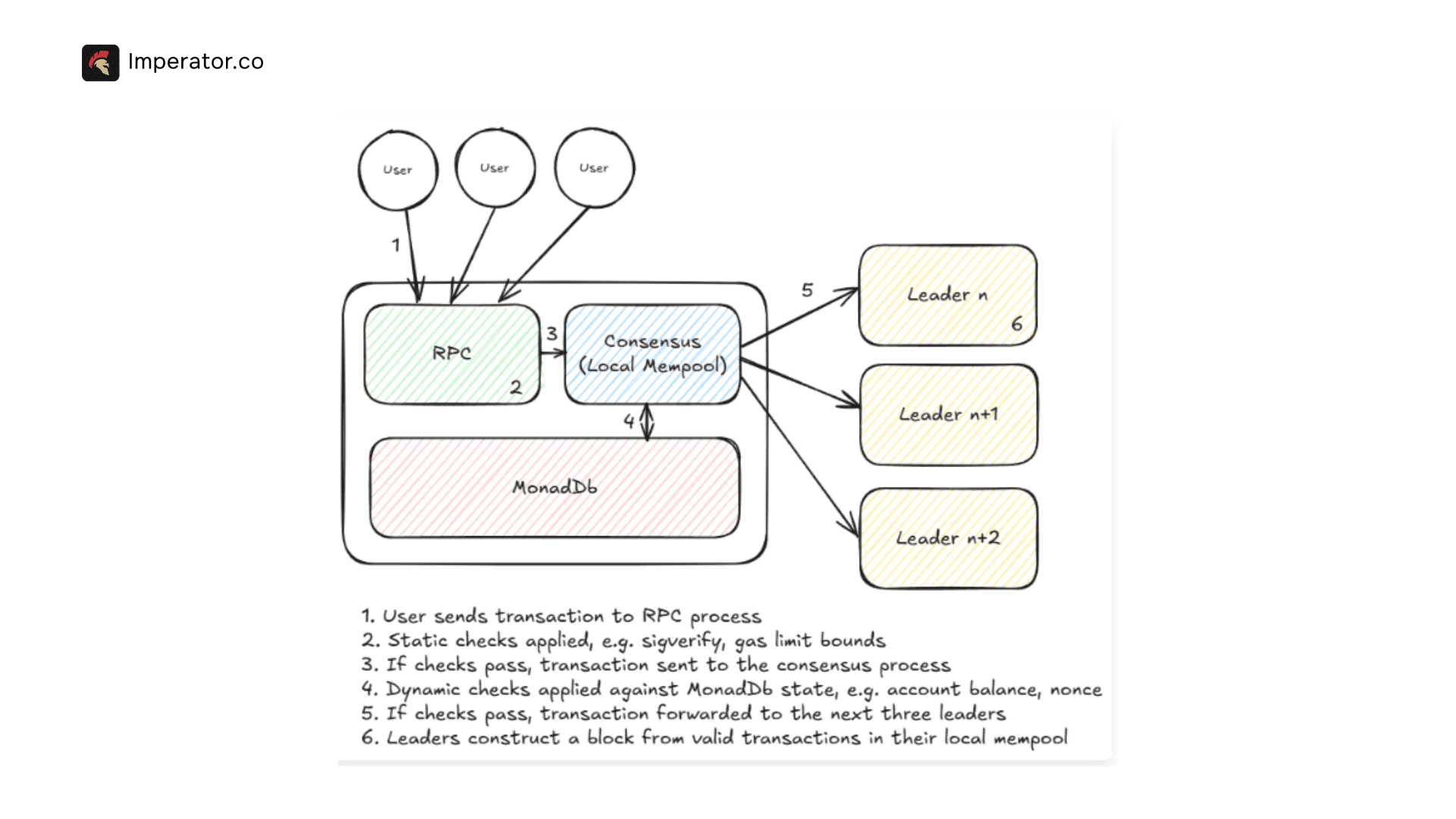
Monad is designed as a high-throughput L1 using parallel execution and deterministic scheduling to deliver low latency, high performance, and efficient block production. As with any Proof-of-Stake (PoS) system, the network depends on a diverse and reliable set of validators to produce blocks, verify transactions, and maintain consensus. For delegators comparing different L1 designs, understanding how high-performance L1 ecosystems operate provides useful context for evaluating validator behavior and network performance.
As a MON holder, staking provides advantages such as:
Earning continuous staking rewards
Contributing to network security and decentralization
But rewards vary meaningfully by validator choice. Operational quality, especially uptime, infrastructure redundancy, and commission rates, has a direct impact on long-term returns.Best Monad Validators to Stake MON
Below is a curated list of six notable operators, selected for their established track records across Proof-of-Stake networks, strong infrastructure, and operational reliability.
This list provides a research-oriented overview to help delegators compare validator options based on considerations of stability, reputation, global distribution, and operational transparency.
1. Imperator

Imperator operates validators across dozens of high-performance networks using globally distributed, professionally managed infrastructure and 24/7 monitoring. For MON delegators, this means consistent uptime, engineered resilience, and predictable validator behavior. Imperator’s operations prioritize decentralization and controlled validator growth for sustainable Monad staking performance, aligning with network-level health.
115,344 clients stake with Imperator.co
115,344 clients stake with Imperator.co
Start staking with Imperator and maximize your rewards.
2. gmonad.com

gmonad.com operates a high-performance Monad validator and provides detailed analytics on validator performance and network activity, offering delegators transparent data to compare validators and track their own staking positions. Delegators typically look for continuous uptime monitoring and infrastructure consistency when prioritizing predictable staking outcomes and low operational variance.
3. Spectrum Staking
Spectrum Staking runs non-custodial validation services across multiple PoS networks, describing its infrastructure as focused on security, reliability, and performance, managed by a team with over 30 years of combined systems engineering and IT security experience. Delegators evaluating Spectrum Staking typically value its combination of stability-focused engineering and a balanced, methodical approach to validator management.
4. TTT Labs
TTT Labs operates enterprise-grade, non-custodial validators across 20+ networks, highlighting a track record of zero slashing events and 24/7 monitoring to maintain reliability for delegators. TTT Labs offers a steady, reliability-oriented option for MON delegators within the growing Monad validator ecosystem.
5. Kintsu

Kintsu is Monad’s native liquid staking protocol and LST provider. Users can stake MON and receive sMON, which represents liquid staking positions. Because they maintain their own validator sets, their operational focus extends beyond simple node uptime to include system-wide resilience. Delegators must understand the additional considerations of LST models, including peg stability, reward smoothing, and MEV distribution mechanics.
6. Magma
Magma utilizes distributed validator (DV) technology, spreading validation responsibilities across contributors. This reduces the risk of single-operator failure and enhances resilience. Their staking model enables users to mint gMON, a community-aligned liquid staking token backed by Magma’s DVT-based validator architecture.
How to Choose the Best Monad Validator
Selecting the best monad validator requires more than brand familiarity. MON delegators should assess measurable, operational characteristics that influence reward outcomes and long-term security.
1. Uptime & Reliability
High uptime is essential. Even minor downtime reduces annual yield. Delegators should check:
Seven-day and 30-day uptime
Missed block history
Performance under network stress
Poor uptime = diluted rewards.
2. Commission Rate
Commission is the fee a validator charges for maintaining node operations. A lower commission doesn’t always mean better value; what matters is the sustainability of the net reward. A validator offering high reliability with a slightly higher commission may outperform a lower commission validator that experiences instability.
3. Infrastructure Quality
Indicators of strong infrastructure:
Geographic node distribution
Redundant failover
Automated monitoring
Hardware and client diversity
Real-time alerts
Secure key management
These qualities reduce operational risk and help maintain steady Monad staking income. Similarly, Imperator’s engineering approach, as evident in ecosystems such as Hyperliquid, shows how purpose-built high-performance infrastructure is engineered for resilience.
4. Validator Track Record
Operators with a strong presence in other PoS networks often demonstrate better long-term reliability. Tracking published performance reports or validator dashboards helps verify cross-chain consistency.
5. Decentralization Consideration
A healthy validator set depends on broad decentralization. Delegators should avoid concentrating stake in only a few operators. This improves network resilience and reduces systemic risk. Selecting mid-sized, yet reliable validators strengthens the network’s overall security posture.
Why Validator Performance Matters
Alt text: Monad validator voting flow
The impact of validator quality becomes clear when evaluating even small reward differences.
Example:
Delegation: 1,000 MON
Network APR: 6%
Commission: 5%
Scenario A: Uptime: 99.9%
Rewards: 60 MON
Net after commission: 57 MON
Scenario B: Uptime: 99.0%
Rewards: ~59.4 MON
Net after commission: ~56.43 MON
Difference:
~0.57 MON lost per year on just 1,000 MON.
Simply put, when MON is scaled to larger positions, the impact compounds significantly.
Staking Tips for Monad Participants
To optimize Monad staking rewards, delegators should apply the following best practices:
1. Monitor Performance Regularly
Review validator dashboards for:
Uptime changes
Missed blocks
Latency indicators
Sudden commission adjustments
Consistent monitoring protects long-term yields.
2. Diversify Delegations
Spreading MON across multiple validators reduces operational risk and supports network decentralization.
3. React to Uptime Issues
Repeated downtime should prompt redelegation. Poor uptime directly affects personal rewards and overall network health.
4. Track Protocol Updates
Upgrades may modify yield structures, unbonding periods, or validator rules. Responsive delegators typically secure better long-term outcomes.
5. Understand Unstaking Mechanics
Know:
The unbonding period
Whether redelegation resets timers
Liquidity implications for LSTs
Sound planning prevents unnecessary delays or reward loss.
Why Choosing the Right Monad Validator Matters
Choosing the right Monad validator directly shapes your staking outcomes. Better uptime and stable operations support stronger annualised rewards, while operators with powerful infrastructure are less likely to experience outages, misconfigurations, or unexpected restarts, which reduces operational risk. Delegating across several reliable validators also strengthens network decentralisation and helps safeguard overall resilience.
Closing Thoughts: Best Monad Validators
Choosing among the best Monad validators means balancing uptime, commission structures, infrastructure reliability, and decentralisation goals with your own risk tolerance and time horizon, then backing that up with proper due diligence. Before delegating MON, it is helpful to review on-chain metrics (uptime, missed blocks, voting power), compare commission changes over time, read validator updates or documentation, and understand the added trade-offs of liquid staking protocols (such as peg risk and reward smoothing).





Discover all our Staking Opportunities
Acces over 50+ protocols to maximize your staking returns
FAQs
1. What is a Monad validator?
A Monad validator is a node operator that participates in block production, transaction verification, and network consensus. Validators secure the chain, enabling delegators to earn staking rewards.
2. How do I find the Best Monad Validators to stake MON with?
Check for operators with consistently high uptime, transparent commission structures, strong infrastructure, and a proven track record on other PoS networks. Always verify performance on the official explorer.
3. What are the risks of staking MON with a validator?
Risks include downtime, reduced rewards, future changes to penalty or slashing mechanisms (Monad does not currently implement automated in-protocol slashing), LST-specific peg risks, MEV-related discrepancies, and exposure to centralization.
4. Why stake MON with an institutional validator like Imperator?
Institutional validators employ hardened security practices, global redundancy, professional monitoring, and infrastructure discipline, designed to deliver consistent and predictable performance.
$0 assets under managment
$0 assets under managment
Join investors who trust Imperator to maximize their returns. Take the first step today.